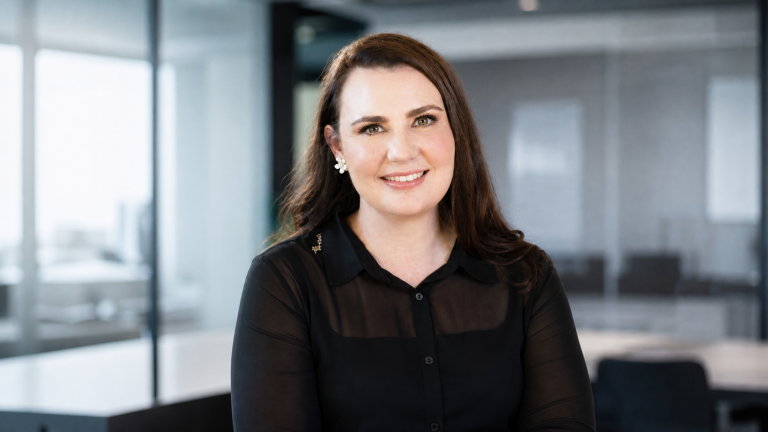
Growth is often discussed as a matter of strategy, capital, and execution. Yet many organizations discover that expansion creates a different problem altogether: systems evolve faster than people, and leadership teams struggle to keep pace with the demands they have created. That gap between organizational ambition and human capability has become a recurring challenge across industries.
It is within that tension that Caryn Walsh built Pure Magic International Business Solutions. Rather than treating leadership development, organizational performance, and business transformation as separate disciplines, Walsh approached them as interconnected forces. The result was a company focused on helping organizations navigate growth without losing alignment between people, culture, and commercial objectives. The primary keyword, Caryn Walsh Pure Magic International Business Solutions, reflects a business philosophy that places long-term organizational health alongside measurable results.
Many consulting firms concentrate on processes, while coaching firms often focus on individuals. Walsh recognized that businesses rarely fail because they lack information. More often, they struggle because leadership teams, communication structures, and operational priorities become disconnected as complexity increases. That observation shaped the foundation of the company’s work and continues to influence its positioning today.
The Problem Pure Magic International Business Solutions Was Really Solving
For many organizations, growth introduces friction that traditional management approaches fail to address. Teams expand, responsibilities become fragmented, and leaders find themselves spending more time reacting than directing. While companies frequently invest in new technologies or operational frameworks, those investments can produce limited results when cultural and leadership challenges remain unresolved.
Pure Magic International Business Solutions focused on a problem that often receives less attention than financial performance metrics. Businesses needed ways to strengthen leadership capacity while maintaining organizational clarity. Walsh recognized that employee engagement, executive effectiveness, and strategic execution are rarely independent issues. Instead, they tend to influence one another in ways that can either accelerate growth or quietly undermine it.
The company’s approach emerged from the belief that organizational performance depends on human behavior as much as operational design. Many clients faced situations where communication breakdowns, leadership fatigue, or conflicting priorities slowed progress. By addressing those root causes rather than merely treating symptoms, the firm positioned itself differently from consultants who focused exclusively on structural change.
Why Caryn Walsh Saw the Industry Differently
What distinguishes Caryn Walsh is not necessarily a rejection of conventional business thinking but a broader interpretation of what drives performance. Rather than viewing leadership development as a support function, she treated it as a strategic requirement. That perspective challenged assumptions that operational improvements alone could sustain growth over time.
Walsh appeared to understand that leaders operate under constant pressure to produce results while simultaneously managing uncertainty, change, and workforce expectations. In many organizations, those pressures are discussed separately. Her perspective connected them, arguing that business outcomes are often shaped by decisions made under emotional and organizational strain rather than purely rational calculations.
That mindset required a degree of patience that is uncommon in environments focused on quarterly performance. While many service providers emphasize immediate interventions, Walsh’s philosophy suggested that sustainable progress requires deeper organizational work. Such a position can be harder to sell because its benefits are often realized gradually rather than instantly.
What Made Caryn Walsh Different From Competitors
In a crowded consulting and leadership advisory market, differentiation is difficult to maintain. Many firms promise better culture, stronger leadership, or improved engagement. The challenge lies in translating those concepts into practical outcomes that business leaders can observe and measure.
Caryn Walsh distinguished herself by emphasizing the relationship between personal leadership effectiveness and organizational success. Rather than treating executives as isolated decision-makers, her approach acknowledged how leadership behaviors influence entire systems. This created a framework that appealed to organizations seeking more than surface-level change initiatives.
Trust also became an important component of the company’s positioning. Leadership challenges often involve sensitive conversations about performance, communication, and accountability. Clients are unlikely to engage honestly unless they believe advisors understand both the commercial realities and human complexities involved. That balance helped Pure Magic International Business Solutions occupy a space between traditional consulting and executive development.
The company’s long-term orientation further separated it from competitors focused primarily on short engagement cycles. By concentrating on capability-building rather than dependency, the firm aligned its value proposition with organizational resilience. That strategy may not generate the fastest short-term wins, but it supports stronger relationships and greater credibility over time.
The Decision That Changed Pure Magic International Business Solutions
One defining decision appears to have been the choice to position the business around integrated transformation rather than a single specialty service. Many firms choose a narrow category because specialization simplifies marketing and client acquisition. Walsh instead embraced a broader view that connected leadership, culture, strategy, and performance.
The decision carried meaningful risks. A wider service offering can create challenges in defining market identity and communicating value to prospective clients. Businesses often prefer simple labels, while integrated solutions require more explanation. Yet the complexity of modern organizations arguably made that broader positioning increasingly relevant.
By refusing to separate organizational performance from leadership effectiveness, the company established a distinctive identity. The move revealed an important belief about the market: that business challenges rarely exist in isolation. Problems that appear operational frequently have leadership dimensions, while cultural issues often influence financial outcomes.
Over time, that decision helped shape the firm’s reputation as a partner capable of addressing interconnected challenges rather than isolated symptoms. It also reinforced the broader theme running through Walsh’s work—that sustainable growth depends on alignment across multiple parts of an organization.
Turning Mission Into Operations
A mission only matters when it influences daily decisions. For Pure Magic International Business Solutions, that meant translating leadership principles into practical operating methods. Businesses seeking transformation generally require more than inspiration; they need frameworks, accountability, and measurable progress.
The firm’s operational focus appears rooted in creating systems that encourage transparency and ownership. Effective organizational change often depends on making expectations visible and ensuring leaders understand their role in achieving outcomes. Without those mechanisms, even well-designed strategies can lose momentum once initial enthusiasm fades.
Hiring and capability development also play an important role in firms operating within advisory and consulting environments. Expertise alone is rarely enough. Professionals must understand human behavior, organizational dynamics, and commercial realities simultaneously. Maintaining that balance requires deliberate talent development and consistent standards across client engagements.
Another operational challenge involves preserving quality while expanding reach. As businesses grow, maintaining consistency becomes more difficult. Organizations that rely heavily on expertise and relationships must continually ensure that scaling does not weaken the experience clients expect to receive.
The Difficult Reality of Scaling
Growth introduces pressures that are easy to underestimate. As client demand increases, organizations face decisions about resource allocation, service delivery, and profitability. Balancing those priorities becomes particularly complex for firms whose value depends heavily on specialized expertise.
For Caryn Walsh, scaling likely involved navigating the tension between personalization and efficiency. Clients often expect tailored solutions, yet growing businesses require processes that can be repeated consistently. Finding equilibrium between those competing demands represents one of the most persistent challenges in professional services.
Competition also becomes more intense as markets mature. Leadership development, executive coaching, and organizational consulting attract numerous participants with overlapping claims. Differentiation therefore depends not only on expertise but also on credibility, client outcomes, and long-term trust.
No growth story is entirely free from criticism or setbacks. Organizations pursuing expansion must constantly evaluate whether new opportunities align with their core purpose. The pressure to grow can sometimes encourage diversification that weakens strategic focus. Maintaining discipline under those conditions requires leadership judgment that is often invisible from the outside.
What Caryn Walsh’s Story Actually Reveals
The story of Caryn Walsh is ultimately less about consulting and more about how organizations respond to complexity. Modern businesses operate in environments where change occurs continuously, and technical solutions alone rarely resolve deeper organizational challenges. The companies that adapt most effectively are often those willing to invest in leadership capacity alongside operational capability.
The broader lesson from Caryn Walsh Pure Magic International Business Solutions is that sustainable growth depends on alignment between people, strategy, and execution. Businesses can scale systems relatively quickly, but developing trust, accountability, and leadership effectiveness takes longer. That reality may be less dramatic than many growth narratives, yet it remains one of the most important factors shaping long-term business performance.