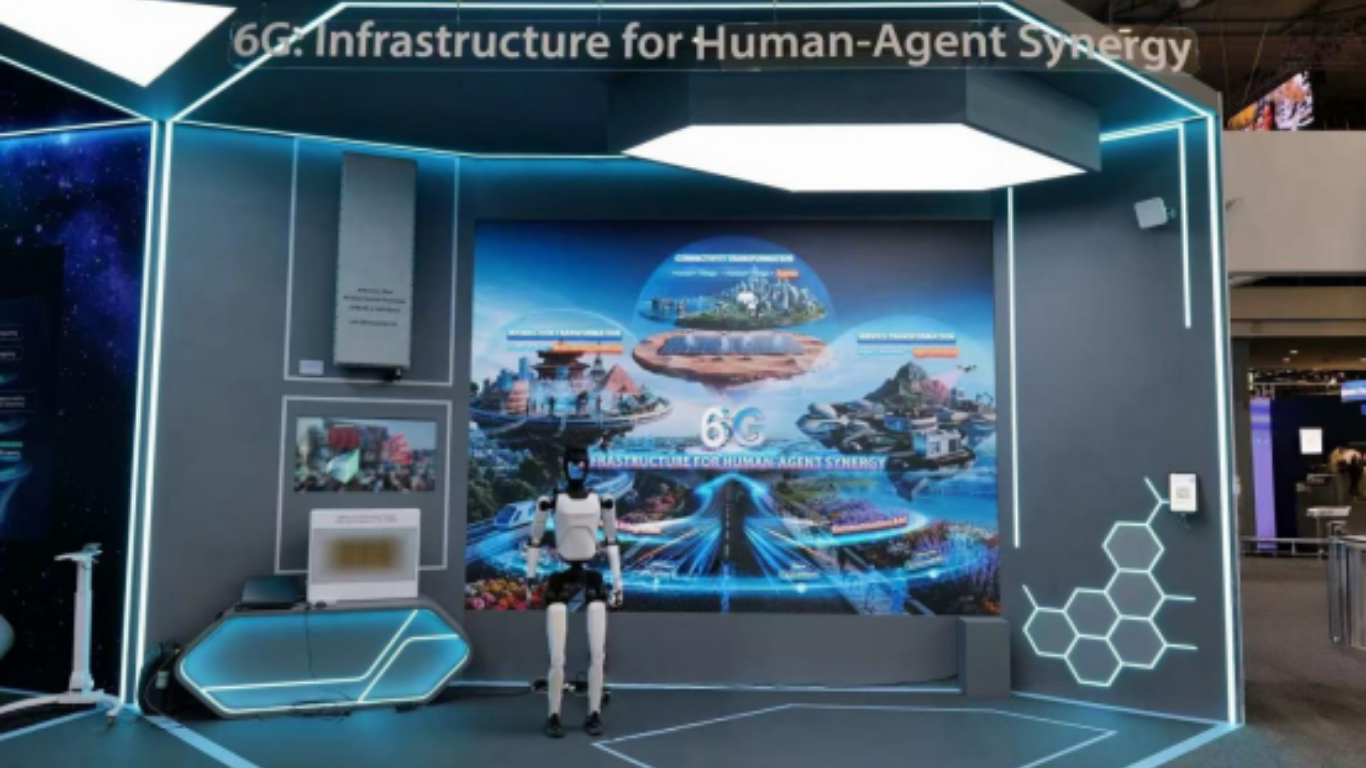
ZTE corp has taken a significant step forward in artificial intelligence by unveiling a groundbreaking embodied intelligent robot at MWC Barcelona 2026. This milestone demonstrates how advanced AI technologies are moving from controlled environments into real-world applications. The debut highlights a new phase in intelligent interaction, where machines are no longer passive tools but active collaborators.
At the event, ZTE, together with DroidUp, introduced the world’s first embodied intelligent guide robot designed for long-term operation in open and crowded environments. This innovation reflects the company’s focus on integrating network capabilities, edge computing, and AI models into a unified system. The result is a practical and scalable approach to human-agent synergy.
A Breakthrough in Embodied Intelligence Applications
The newly unveiled robot represents a major evolution in AI deployment. This innovation is the result of joint efforts between ZTE and DroidUp, combining robotics design with advanced network and computing capabilities. Unlike traditional robots that operate in limited or structured settings, this system performs reliably in complex and dynamic environments. It can function continuously in crowded public spaces, demonstrating strong adaptability and stability.
ZTE enables this capability by combining high-performance network infrastructure with edge computing. These technologies allow the robot to process data in real time and respond instantly to environmental changes. As a result, the robot delivers consistent performance even in high-density scenarios.
Intelligent Interaction Redefined
One of the most notable features of the robot is its advanced interaction capability. Powered by a proprietary large-scale AI model, the system transforms communication from reactive responses to proactive engagement.
The robot can detect a visitor’s distance and body language. It uses this information to initiate greetings and create a natural first interaction. This ability enhances user experience and makes communication feel intuitive.
During conversations, the robot supports natural interruptions and resumes dialogue smoothly. This creates a fluid exchange similar to human communication. Its multilingual system allows it to switch between several languages, including Chinese, English, French, and Spanish. This flexibility ensures accessibility for a global audience.
From Individual Interaction to Environmental Awareness
The innovation extends beyond one-on-one communication. The robot operates as part of a broader intelligent system that interacts with its surroundings.
Supported by a high-uplink and low-latency wireless network, the robot connects to edge computing resources. This architecture allows it to process environmental data efficiently. It can analyze surroundings, identify obstacles, and plan movement paths in real time.
Using LiDAR and vision-based algorithms, the robot achieves precise navigation. It moves smoothly through crowded areas while avoiding obstacles. This capability enables it to guide visitors across large spaces without disruption.
The robot also synchronizes with the environment. It can adjust lighting and screen content based on its narration. This creates a coordinated and immersive experience for users. The system effectively acts as a central controller that enhances the overall environment.
Full-Stack Technology Enables Scalable Innovation
The success of this embodied intelligence solution is built on a comprehensive technology framework. Through collaboration with DroidUp, ZTE integrates multiple layers of innovation, including network infrastructure, edge computing, AI models, and environmental perception.
This full-stack approach ensures seamless coordination between hardware and software. Each component contributes to the system’s overall performance. The network provides reliable connectivity. Edge computing delivers low-latency processing. AI models enable intelligent decision-making.
By combining these elements, ZTE transforms intelligent agents into collaborative partners. These agents can perceive context, make decisions, and interact naturally with users. This represents a shift from simple automation to advanced intelligence.
Collaboration and Ecosystem Development
At MWC Barcelona 2026, ZTE also emphasized the importance of ecosystem collaboration. The company engaged with global partners to explore the integration of AI, cloud computing, and intelligent operations.
Industry discussions highlighted the growing role of AI in transforming network infrastructure. Experts noted that future networks will rely on the combined development of AI, AIOps, and cloud technologies. These elements work together to create adaptive and autonomous systems.
ZTE contributes to this evolution by providing integrated solutions that support real-time AI deployment. Its approach focuses on open collaboration and shared innovation. This enables partners to develop practical applications and accelerate adoption.
Real-World Validation at a Global Platform
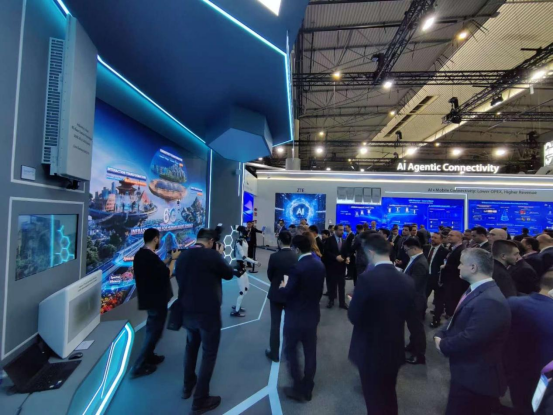
The joint demonstration by ZTE and DroidUp at MWC Barcelona 2026 provided strong validation for the embodied intelligence solution. The robot operated continuously in an open environment with dense crowds. This scenario tested its reliability, adaptability, and performance.
The results confirmed that the system can handle real-world challenges. It maintained stable operation while delivering high-quality interaction experiences. This achievement marks a critical step in the commercialization of embodied intelligence.
The ability to sustain long-term operation in complex environments sets a new benchmark for the industry. It proves that intelligent agents can move beyond controlled demonstrations and deliver consistent value in practical settings.
Expanding the Vision of Human-Agent Synergy
The introduction of this robot reflects a broader vision of human-agent collaboration. ZTE aims to create systems where humans and intelligent agents work together seamlessly.
In this vision, AI is not just a tool but a partner. It supports decision-making, enhances efficiency, and improves user experience. The integration of perception, interaction, and intelligence enables deeper collaboration between humans and machines.
This approach also aligns with the ongoing evolution of digital technologies. As connectivity and computing capabilities advance, the boundary between physical and digital environments continues to blur. Intelligent agents play a key role in bridging this gap.
Conclusion
ZTE corp, together with DroidUp, has demonstrated a clear advancement in embodied intelligence with this joint innovation at MWC 2026. The successful deployment of a long-operating intelligent robot in real-world conditions marks a turning point for AI applications.
Looking ahead, ZTE will continue to explore new possibilities in embodied intelligence. The focus remains on creating systems that enhance human experiences and enable seamless collaboration. This direction sets the foundation for a future where intelligent agents become an integral part of everyday life